
Roasted Cauliflower Soup
Roasted Cauliflower Soup. Oh, where do I even begin with this absolute dream of a soup? If you think cauliflower is bland, prepare to have your mind (and taste buds!) completely blown. What makes this recipe so incredibly special, you ask? It’s all in the roasting. We’re not just boiling some florets here; we’re giving that humble cauliflower a proper sunbath in the oven until it’s beautifully caramelized and nutty, unlocking a depth of flavor that’s truly extraordinary.
I promise you, once you taste this, you’ll understand why it’s become a staple in my kitchen. Readers will absolutely love how effortlessly elegant and comforting this soup is. It’s the perfect bowl of warmth for a cozy evening, a surprisingly sophisticated starter for a dinner party, or a wonderfully wholesome lunch that feels incredibly indulgent. It’s healthy, incredibly flavorful, and just pure comfort in a bowl.
In a nutshell, this dish transforms simple cauliflower into a velvety, rich, and deeply savory soup. We roast the cauliflower with a hint of garlic and herbs until golden, then simmer it gently with vegetable broth and blend it into a silky-smooth perfection. The result? A naturally creamy soup that’s bursting with flavor, satisfying without being heavy, and just begging to be savored spoonful by spoonful. You won’t believe how much flavor comes from such simple ingredients!

Ingredient Notes
Welcome to the heart of our Roasted Cauliflower Soup recipe! Here, I’ll walk you through the key ingredients that make this dish so incredibly comforting and flavorful, along with some handy substitutions to suit your pantry and preferences.
The absolute star of this show is, of course, the cauliflower itself. You’ll want one large head, or two smaller ones, weighing about 2-3 pounds. The magic truly happens when we roast it – this process coaxes out a nutty, slightly sweet flavor that plain steamed cauliflower simply can’t achieve. Don’t be shy about letting it get a little browned and caramelized; that’s where the deep, complex notes for our soup come from. If, for some reason, cauliflower isn’t available, you could technically try this with broccoli or even a mix of root vegetables, but please know the flavor profile will shift significantly. Cauliflower is king here!
Next up, we have our aromatic foundation: yellow onion and garlic. A medium-sized yellow onion, roughly chopped, provides a sweet and savory base. For the garlic, about 4-6 cloves, minced, will give that essential pungent warmth. Roasting some of the garlic with the cauliflower mellows its intensity beautifully, while a little fresh garlic added to the pot later can provide a bright counterpoint. Shallots can be a wonderful, milder substitute for yellow onion if you have them on hand.
For the liquid component, you’ll need vegetable broth. I always recommend a good quality, low-sodium vegetable broth as it allows you to control the seasoning precisely. Chicken broth is also an excellent choice if you prefer a richer, more savory undertone. While beef broth is generally too robust for cauliflower soup, if you’re looking for an intensely savory and hearty option, it can be used, though it will dramatically alter the soup’s delicate, roasted cauliflower character.
To achieve that luscious, creamy texture we all crave in a good soup, I typically use a touch of heavy cream or whole milk. About half a cup should do the trick, added at the very end. If you’re aiming for a dairy-free or vegan version, full-fat canned coconut milk is an absolutely fantastic alternative. It adds a subtle sweetness and incredible creaminess without overpowering the cauliflower. Cashew cream (made by blending soaked cashews with water) is another brilliant option for a truly rich, dairy-free finish.
Don’t forget the fat for roasting and sautéing: good quality olive oil. Extra virgin olive oil will impart a lovely flavor, but any cooking olive oil will work. For seasoning, simple salt and freshly ground black pepper are crucial. A pinch of freshly grated nutmeg can elevate the soup’s flavor, adding a warm, almost custardy depth that pairs beautifully with cauliflower. Some people also enjoy a touch of dried thyme or a bay leaf added to the broth as it simmers.
This carefully selected group of ingredients, especially when the cauliflower is beautifully roasted, ensures a depth of flavor that is truly more than the sum of its parts.
Step-by-Step Instructions
Making this Roasted Cauliflower Soup is a wonderfully rewarding process, largely because the roasting step does so much of the heavy lifting in developing incredible flavor. Follow these clear steps, and you’ll have a bowl of deliciousness in no time!
Step 1: Prepare the Cauliflower for Roasting.
First things first, preheat your oven to a nice hot 400°F (200°C). While the oven is heating, grab your head of cauliflower. Remove the tough outer leaves and trim the bottom stem. Then, cut the cauliflower into bite-sized florets. Try to keep them somewhat uniform in size so they roast evenly. Take about half of your minced garlic (2-3 cloves) and set it aside for later. In a large bowl, toss the cauliflower florets and the other half of your minced garlic with about 2-3 tablespoons of olive oil, a generous pinch of salt, and a good grind of black pepper. Make sure everything is well coated.
Step 2: Roast the Cauliflower to Perfection.
Spread the seasoned cauliflower and garlic in a single layer on a large baking sheet. It’s really important not to overcrowd the pan; if necessary, use two baking sheets to ensure the cauliflower roasts and caramelizes, rather than steams. Pop the baking sheet(s) into your preheated oven and roast for about 25-35 minutes. You’re looking for the florets to be tender when pierced with a fork, and, crucially, beautifully golden brown and slightly caramelized on the edges. That browning is where all the deep, nutty flavor comes from, so don’t rush it! Stir them once or twice halfway through roasting for even browning.
Step 3: Sauté the Aromatics.
While the cauliflower is roasting, you can start on the rest of the soup base. In a large, heavy-bottomed pot or Dutch oven, heat another tablespoon of olive oil over medium heat. Add your chopped yellow onion and cook, stirring occasionally, until it softens and becomes translucent, about 5-7 minutes. Then, add the remaining minced garlic (the 2-3 cloves you set aside earlier) and cook for just another minute until fragrant, being careful not to let it burn.
Step 4: Combine and Simmer.
Once your cauliflower is perfectly roasted, carefully transfer it from the baking sheet into the pot with the sautéed onions and garlic. Pour in your vegetable or chicken broth. Stir everything together gently. Bring the mixture to a simmer over medium-high heat, then reduce the heat to low, cover the pot, and let it gently simmer for about 10-15 minutes. This allows all the flavors to meld beautifully and ensures the cauliflower is truly tender for blending.
Step 5: Blend to Silky Smoothness.
Now for the magic! You have two main options here. For an ultra-smooth soup, carefully transfer the hot soup in batches to a regular blender. Make sure not to overfill it and secure the lid tightly, holding it down with a kitchen towel (hot liquids can create pressure). Blend until completely smooth and creamy. Alternatively, if you have an immersion blender, you can blend the soup directly in the pot until it reaches your desired consistency. Be cautious when blending hot liquids.
Step 6: Finish and Season.
Once blended, return the soup to the pot if you used a regular blender. Stir in your heavy cream, whole milk, or dairy-free alternative like coconut milk. Heat gently over low heat for a few minutes, just until warmed through; do not bring it to a boil after adding the cream, as it can curdle. Taste the soup and adjust the seasonings as needed. This is your chance to add more salt, pepper, or that special pinch of nutmeg.
Step 7: Serve and Enjoy!
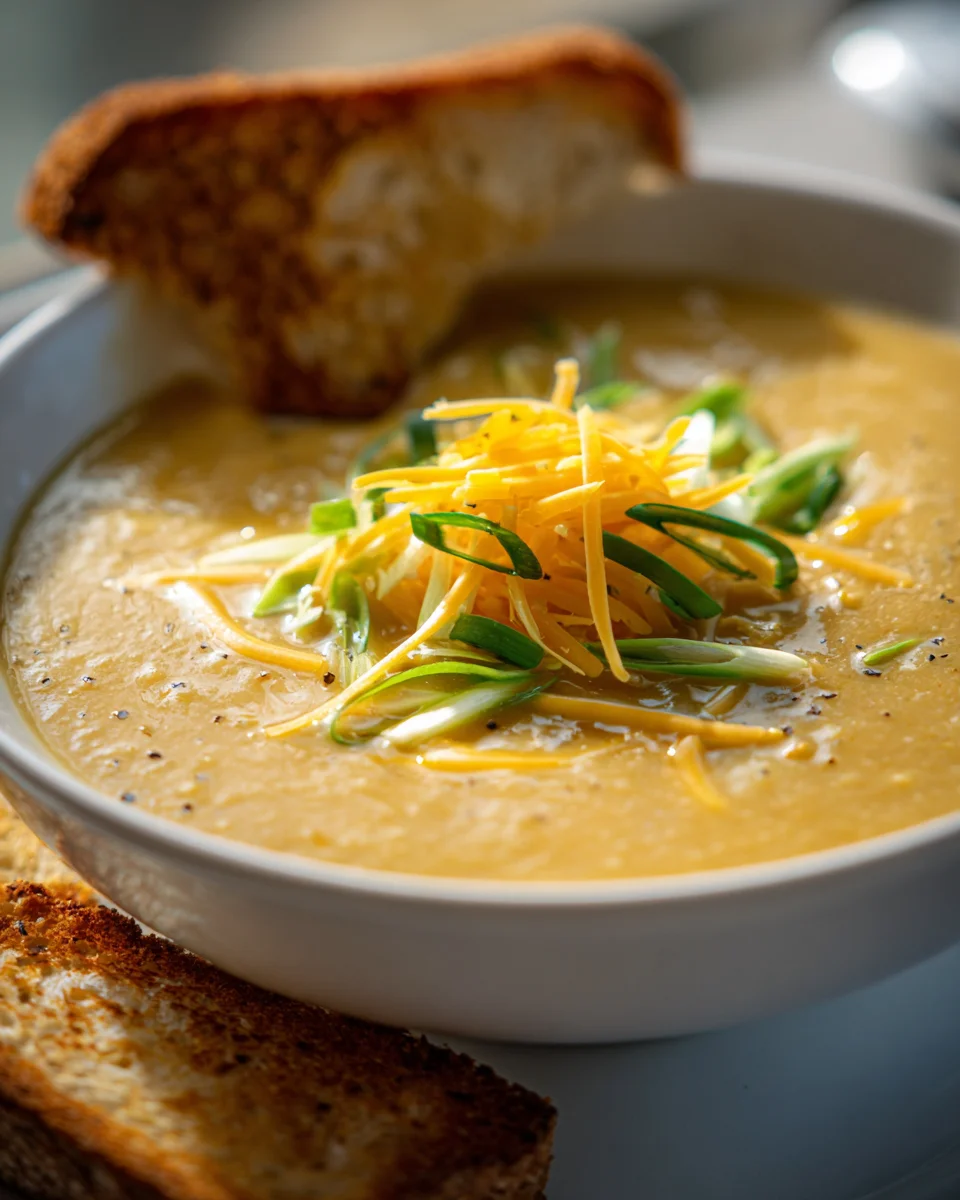
Ladle your glorious Roasted Cauliflower Soup into bowls. I love to garnish it with a drizzle of olive oil, fresh chives, a sprinkle of smoked paprika, or some homemade croutons. This soup is a testament to how simple ingredients can create profound flavor.
Tips & Suggestions
Elevating your Roasted Cauliflower Soup from good to truly exceptional is all about a few thoughtful details. Here are my favorite tips and suggestions to help you make the most out of this wonderful dish:
Embrace the Roast: This is the most critical tip! Don’t be afraid to let your cauliflower get really deeply golden brown, with some slightly charred edges. Those caramelized bits are packed with flavor and are what differentiate this soup from a bland, boiled version. If your oven tends to roast unevenly, stir the florets more frequently. Using parchment paper can also prevent sticking and aid in browning.
For Ultimate Creaminess: While an immersion blender is convenient, a high-speed regular blender will give you the silkiest, most luxurious texture. Just be sure to blend in batches and vent the lid to allow steam to escape safely. For extra richness without more cream, consider adding a peeled, cooked potato or a tablespoon of softened cream cheese (if dairy is okay) to the soup before blending.
Garnish with Gusto: Garnishes aren’t just for looks; they add texture and layers of flavor! Some fantastic options include a swirl of extra heavy cream or coconut milk, a sprinkle of fresh herbs like chives or parsley, crunchy homemade croutons, toasted pumpkin seeds, or a dusting of smoked paprika. For an extra savory kick, crispy beef bacon bits or pan-fried crispy beef pastrami pieces (a great substitution for pork bacon) make an incredible topping. A drizzle of chili oil can also add a delightful warmth.
Spice it Up: While the classic version is fantastic, don’t hesitate to play with spices. A teaspoon of curry powder or garam masala added with the onions can transform it into a vibrant, Indian-inspired soup. A pinch of smoked paprika can add a lovely depth, especially if you enjoy smoky flavors. Cumin also pairs wonderfully with cauliflower.
Make it Vegan/Dairy-Free: As mentioned, full-fat canned coconut milk is your best friend here. For an even creamier, subtly nutty flavor, you can also blend in 1/4 cup of raw cashews (soaked in hot water for 30 minutes, then drained) with the soup before adding any other liquid. This creates a wonderfully rich cashew cream base.
Texture Play: If you enjoy a little texture in your soup, reserve a small handful of those beautifully roasted cauliflower florets before blending. You can stir them back into the soup just before serving for little bursts of roasted goodness.
Storage
One of the great things about Roasted Cauliflower Soup is how well it stores, making it perfect for meal prepping or enjoying leftovers.
Refrigeration:
Once your soup has cooled completely to room temperature, transfer it to an airtight container. It will keep beautifully in the refrigerator for up to 3-4 days. I always recommend cooling it down quickly before storing to maintain freshness and safety. You can speed up the cooling process by placing the pot of soup in an ice bath in your sink, stirring occasionally, or by dividing it into shallower containers.
Freezing:
Yes, Roasted Cauliflower Soup freezes exceptionally well! This is fantastic if you’re making a big batch. Again, ensure the soup is fully cooled. Pour it into freezer-safe airtight containers or heavy-duty freezer bags. If using bags, lay them flat in the freezer until solid for efficient stacking. Leave a little headspace (about an inch) in containers to allow for expansion during freezing. Frozen soup will maintain its quality for up to 2-3 months. Beyond that, it’s still safe to eat, but the texture or flavor might start to diminish slightly.
Thawing and Reheating:
When you’re ready to enjoy your frozen soup, the best way to thaw it is overnight in the refrigerator. If you’re in a hurry, you can gently thaw it in a pot on the stovetop over very low heat, stirring frequently, or use the defrost setting on your microwave.
To reheat, gently warm the soup on the stovetop over medium-low heat, stirring occasionally, until it’s hot throughout. Alternatively, you can reheat individual portions in the microwave. If the soup has thickened too much in the fridge or freezer, you might want to add a splash of extra broth, milk, or water to reach your desired consistency while reheating. Taste and adjust seasonings as needed, as flavors can sometimes mellow slightly after refrigeration or freezing.
With these storage tips, you can ensure a delicious bowl of Roasted Cauliflower Soup is always just a reheat away!
Final Thoughts
There’s something truly magical about transforming a humble head of cauliflower into an extraordinary meal, and that’s precisely what our Roasted Cauliflower Soup achieves. I genuinely believe this recipe is a must-try because it takes the often-mild cauliflower and elevates it to new heights through the simple act of roasting. The deep, caramelized flavors mingle perfectly with the creamy texture, creating a bowl of pure comfort that’s both surprisingly rich and wonderfully wholesome. It’s elegant enough for a special occasion, yet comforting enough for a cozy night in. I hope you enjoy every spoonful of this delightful Roasted Cauliflower Soup as much as I do!

Roasted Cauliflower Soup: Creamy, Cozy, & Healthy Delight
- Total Time: 50 minutes
- Yield: 4 servings 1x
Description
This Roasted Cauliflower Soup transforms simple cauliflower into a velvety, rich, and deeply savory dish. It’s a comforting bowl of warmth that’s surprisingly sophisticated and healthy.
Ingredients
- 1 large head of cauliflower (or 2 smaller ones, weighing about 2–3 pounds)
- 1 medium-sized yellow onion, roughly chopped
- 4–6 cloves of garlic, minced
- 2–3 tablespoons of olive oil
- Salt, to taste
- Freshly ground black pepper, to taste
- Vegetable broth (or chicken broth)
- 1/2 cup of heavy cream or whole milk (or full-fat canned coconut milk for a dairy-free option)
- A pinch of freshly grated nutmeg
- Dried thyme (optional)
- Bay leaf (optional)
Instructions
- Step 1: Prepare the Cauliflower for Roasting. Preheat your oven to 400°F (200°C). Remove the tough outer leaves and trim the bottom stem of the cauliflower. Cut the cauliflower into bite-sized florets. Set aside half of the minced garlic (2-3 cloves) for later. Toss the cauliflower florets and the other half of the minced garlic with olive oil, salt, and black pepper in a large bowl until well coated.
- Step 2: Roast the Cauliflower to Perfection. Spread the seasoned cauliflower and garlic in a single layer on a large baking sheet. Roast in the preheated oven for about 25-35 minutes until the florets are tender and golden brown.
- Step 3: Sauté the Aromatics. In a large pot or Dutch oven, heat another tablespoon of olive oil over medium heat. Add the chopped yellow onion and cook until soft and translucent, about 5-7 minutes. Add the remaining minced garlic and cook for another minute until fragrant.
- Step 4: Combine and Simmer. Transfer the roasted cauliflower to the pot with the sautéed onions and garlic. Pour in the vegetable or chicken broth and stir gently. Bring to a simmer, then reduce heat to low, cover, and simmer for about 10-15 minutes.
- Step 5: Blend to Silky Smoothness. Carefully transfer the soup in batches to a blender or use an immersion blender to blend until completely smooth.
- Step 6: Finish and Season. Return the blended soup to the pot if using a regular blender. Stir in the heavy cream, whole milk, or coconut milk and heat gently. Adjust seasonings as needed.
- Step 7: Serve and Enjoy! Ladle the soup into bowls and garnish with a drizzle of olive oil, fresh chives, smoked paprika, or homemade croutons.
- Prep Time: 15 mins
- Cook Time: 35 mins
- Category: Soup
- Method: Roasting and Blending
- Cuisine: American
Nutrition
- Serving Size: 1 bowl
- Calories: 250
- Sugar: 3 g
- Sodium: 600 mg
- Fat: 15 g
- Saturated Fat: 8 g
- Unsaturated Fat: 7 g
- Trans Fat: 0 g
- Carbohydrates: 20 g
- Fiber: 6 g
- Protein: 5 g
- Cholesterol: 30 mg
Keywords: For ultimate creaminess, use a high-speed blender. Garnish with fresh herbs, croutons, or crispy bacon bits for added texture and flavor. For a vegan version, use coconut milk and consider adding soaked cashews for richness.